
Air Plants Care Guide
Tillandsia - The Soilless Wonder Plants
About Air Plants

Tillandsia usneoides (Spanish Moss) at McBryde Garden, Hawaii, showing characteristic epiphytic growth habit
Air plants, scientifically known as Tillandsia, are members of the Bromeliaceae family. These fascinating epiphytes are native to the forests, mountains, and deserts of Central and South America. Unlike most plants, they don't require soil to grow—they absorb water and nutrients through specialized scales on their leaves called trichomes.
With over 650 species, Tillandsia display remarkable diversity in size, shape, and color. They've adapted to thrive in various environments, making them incredibly resilient and low-maintenance houseplants.
Light Requirements
Brightness: Air plants thrive in bright, indirect light. A spot near an east or west-facing window is ideal.
Direct Sunlight: Avoid prolonged direct sunlight, especially during midday, as it can scorch the leaves. However, some morning or late afternoon sun is beneficial.
Indoor Placement: Place them within 3-5 feet of a window or under grow lights if natural light is limited.
Signs of Too Much Light: Leaves may turn brown or appear bleached.
Signs of Too Little Light: Plants may become elongated, lose color, or fail to bloom.
Watering Guide
Frequency: Water thoroughly 2-3 times per week by misting or soaking.
Soaking Method: Submerge plants in room-temperature water for 20-30 minutes once a week. Shake off excess water afterward.
Misting: On non-soaking days, mist plants thoroughly until water runs off the leaves.
Drying: After watering, place plants upside down or at an angle to allow water to drain from the center. This prevents rot.
Water Quality: Use filtered, rainwater, or pond water if possible. Tap water is acceptable but let it sit overnight to dissipate chlorine.
Seasonal Adjustments: Increase watering in summer and decrease in winter when plants are semi-dormant.
Temperature & Humidity
Temperature Range: 50-90°F (10-32°C). Most comfortable at 60-80°F (15-27°C).
Cold Tolerance: Protect from temperatures below 45°F (7°C). Freezing temperatures are fatal.
Humidity: Prefer 50-70% humidity. In dry environments, increase misting frequency or use a humidifier.
Air Circulation: Good air flow is essential. Avoid closed terrariums unless opened regularly for air exchange.
Fertilizing
Frequency: Fertilize once a month during the growing season (spring and summer).
Type: Use a bromeliad or air plant-specific fertilizer, or dilute regular fertilizer to 1/4 strength.
Application: Add fertilizer to misting water or soaking water.
Benefits: Regular fertilization promotes healthier growth, more vibrant colors, and better blooming.
Display & Mounting
No Soil Needed: Air plants don't require soil and should never be planted in it.
Display Options: Place in glass vessels, mount on wood or cork, hang with wire, or display in creative holders.
Mounting: Use non-toxic glue (like E6000 or hot glue) or wire to secure plants to driftwood, shells, or decorative objects.
Avoid: Don't place in closed containers without ventilation or completely enclosed globes.
Blooming & Propagation
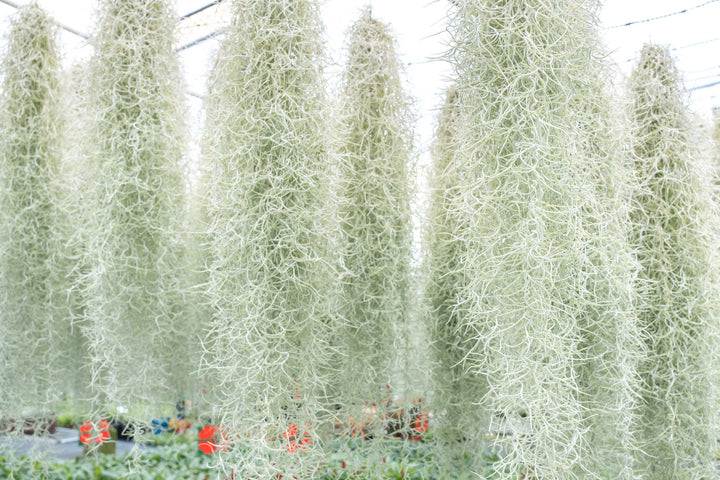
Tillandsia usneoides (Colombian Spanish Moss) showing natural growth habit and propagation potential
Blooming: Mature air plants bloom once in their lifetime, producing vibrant flowers in red, pink, purple, or yellow.
After Blooming: The mother plant will slowly decline but produce 2-8 "pups" (offsets) at its base.
Pup Care: Leave pups attached until they're 1/3 to 1/2 the size of the mother plant, then gently separate.
Timeline: Pups take 1-3 years to mature and bloom depending on species and care.
Common Problems & Solutions
Brown Tips: Usually caused by underwatering, low humidity, or salt buildup from tap water. Increase watering frequency and improve water quality.
Rotting: Result of inadequate drying after watering or poor air circulation. Ensure plants dry within 4 hours of watering.
Wrinkled or Curled Leaves: Sign of severe dehydration. Give an extended soak (2-3 hours) and increase watering frequency.
Pale or Yellowing Leaves: Often indicates too much light or over-fertilization. Move to a shadier spot and reduce fertilizer.
Pro Tips for Success
- Air plants are pet-friendly and non-toxic to cats and dogs
- Different species have different needs—silvery plants with more trichomes need less water than greener varieties
- Rotate plants occasionally to ensure even growth and prevent etiolation
- If you're going on vacation, give plants a good soak before leaving and reduce their light exposure
- Bathrooms often provide ideal humidity for air plants
- Watch for pests like mealybugs or scale, though they're rare—treat with diluted isopropyl alcohol if needed