
Bonsai Care Guide
The Ancient Art of Miniature Tree Cultivation
About Bonsai
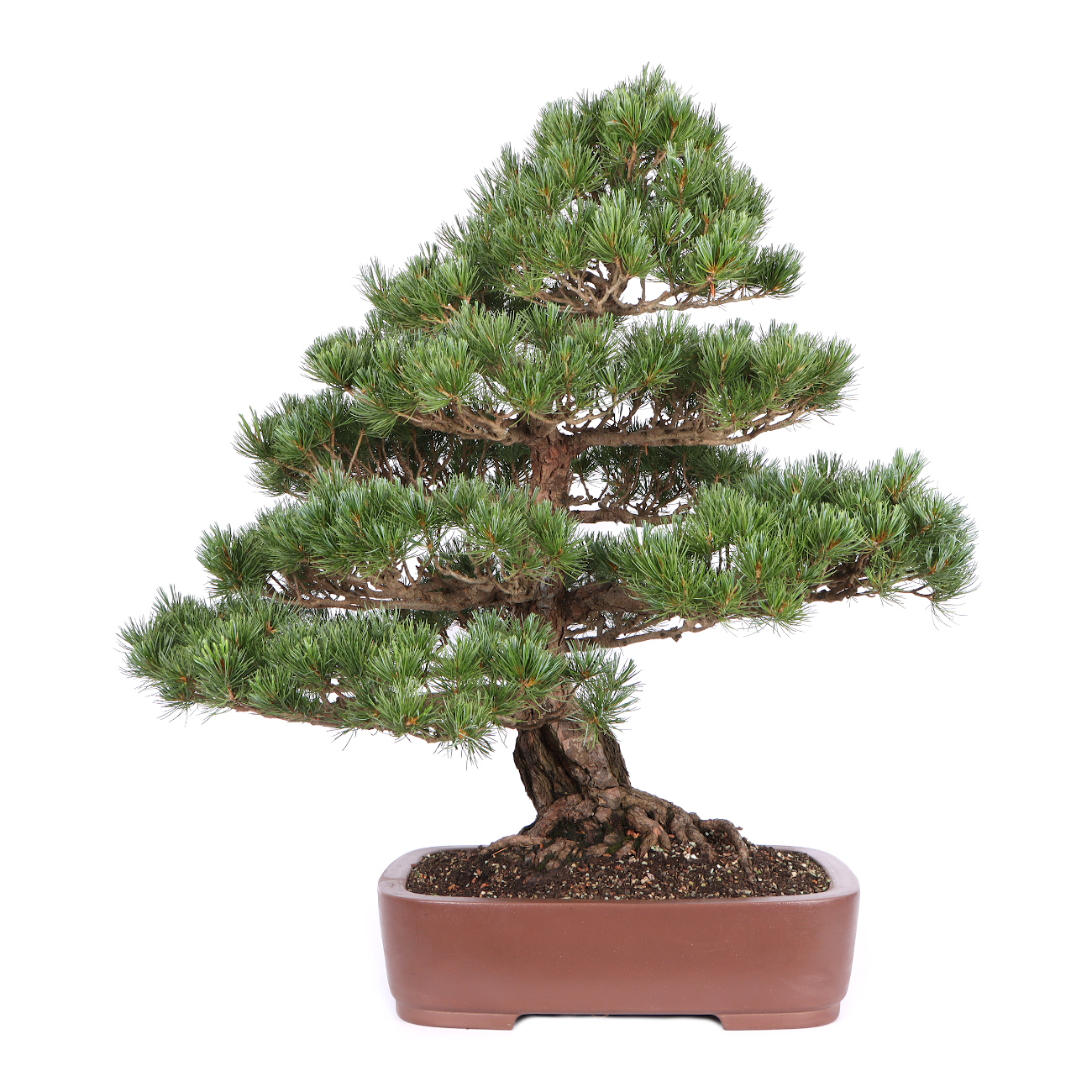
Pinus parviflora 'Glauca' (Japanese White Pine) displaying classic bonsai styling with elegant form
Bonsai, derived from the Japanese words "bon" (tray) and "sai" (planting), is the ancient art of growing and shaping miniature trees in containers. Originating in China over a thousand years ago and refined in Japan, bonsai is not a specific species but rather a cultivation technique that can be applied to many tree varieties.
The practice combines horticultural techniques with artistic vision to create living sculptures that mimic the shape and scale of full-sized trees. Through careful pruning, wiring, and training, practitioners guide trees to develop aesthetic forms while maintaining their health and vigor in confined spaces. Bonsai cultivation teaches patience, observation, and respect for natural growth patterns.
Light Requirements
Indoor Bonsai: Need 6-8 hours of bright, indirect light daily. Place near south or east-facing windows for optimal light.
Outdoor Bonsai: Most traditional bonsai species are outdoor trees requiring full or partial sunlight for at least 4-6 hours daily.
Species Variations: Tropical and subtropical species (Ficus, Jade) can live indoors year-round. Temperate species (Maple, Pine, Juniper) need outdoor conditions and winter dormancy.
Seasonal Changes: Rotate bonsai regularly to ensure even growth. Outdoor trees may need protection from intense summer sun or harsh winter winds.
Artificial Lighting: If natural light is insufficient, supplement with full-spectrum grow lights positioned 6-12 inches above the tree.
Signs of Insufficient Light: Elongated internodes, pale leaves, weak growth, leaf drop.
Signs of Too Much Light: Scorched leaf tips, faded foliage, crispy leaves.
Watering
Daily Monitoring: Check soil moisture daily by pressing finger into soil. Water when topsoil feels slightly dry but not completely dried out.
Watering Method: Water thoroughly using a watering can with a fine rose (sprinkler head) or by submerging the entire pot in water for 5-10 minutes.
Overhead Watering: Water until excess drains from drainage holes. Wait a few minutes, then water again to ensure complete saturation.
Submersion Method: Place pot in basin of water up to the rim. Remove when bubbles stop rising and soil is saturated.
Water Quality: Rainwater or filtered water is ideal. If using tap water, let it sit overnight to dissipate chlorine.
Seasonal Variations: Water more frequently in summer heat and active growth periods. Reduce watering in winter when trees are dormant.
Time of Day: Morning watering is best, allowing excess moisture to evaporate during the day.
Never: Allow bonsai to sit in standing water or completely dry out. Both extremes can be fatal.
Warning Signs: Wilting leaves indicate underwatering; yellow leaves and root rot suggest overwatering.
Soil & Repotting
Bonsai Soil Components: Well-draining mixes typically include Akadama (Japanese clay), lava rock, and pumice in various ratios.
Why Special Soil: Bonsai soil must drain quickly while retaining adequate moisture and providing aeration to roots.
Basic Mix: 50% Akadama, 25% pumice, 25% lava rock. Adjust ratios based on species and climate.
Alternative Components: Calcined clay, turface, diatomaceous earth, or commercial bonsai soil blends.
Avoid: Regular potting soil retains too much water and can cause root rot.
Repotting Frequency: Young trees every 2-3 years, mature trees every 4-5 years. Fast-growing species may need annual repotting.
Best Time: Early spring before buds swell, when tree is emerging from dormancy. Tropical species can be repotted in summer.
Root Pruning: Remove up to 1/3 of root mass during repotting, cutting back circling roots and maintaining radial root structure.
After Repotting: Place in shade for 2-4 weeks, water carefully, and avoid fertilizing until new growth appears.
Fertilizing
Importance: Bonsai soil has minimal nutrients; regular fertilization is essential for health and vigor.
Frequency: Apply balanced bonsai fertilizer every 2-4 weeks during growing season (spring through fall).
Winter Feeding: Reduce feeding in fall, stop during winter dormancy for deciduous trees. Tropical indoor bonsai need year-round feeding at reduced rates.
NPK Ratios: Balanced 10-10-10 for general use. Higher nitrogen (12-6-6) in spring for foliage. Higher phosphorus (6-10-10) in fall for root development.
Organic vs. Synthetic: Organic fertilizers (fish emulsion, seaweed) release slowly and improve soil. Synthetic fertilizers provide immediate nutrients.
Application: Liquid fertilizers are easy to apply; pellet fertilizers release gradually. Follow package instructions and err on the side of less.
After Repotting: Wait 4-6 weeks before resuming fertilization to avoid burning new roots.
Pruning & Shaping

Ficus retusa bonsai displaying spectacular aerial roots and fine branching structure achieved through careful pruning
Maintenance Pruning: Regular trimming to maintain shape. Pinch back new growth to encourage ramification (fine branching).
Structural Pruning: Major cuts to establish or change the tree's structure. Best done during dormancy or early spring.
Tools: Sharp bonsai scissors for twigs, concave cutters for branches (create concave cuts that heal flat), wire cutters for wiring.
Technique: Cut just above a bud or node, at a slight angle. Remove crossing branches, branches growing straight up or down, and unwanted growth.
Wound Care: Seal large cuts with cut paste or wound sealant to prevent infection and promote healing.
Defoliation: Advanced technique of removing all leaves to reduce leaf size and encourage fine ramification. Only for healthy, vigorous trees.
Pinching: For conifers and some deciduous trees, pinch new growth with fingers rather than cutting to maintain natural appearance.
Wiring & Styling
Purpose: Wiring allows you to bend and position branches into desired shapes, mimicking natural tree forms.
Wire Types: Aluminum wire (easier to work with, for deciduous trees) or copper wire (stronger, for conifers and thick branches).
Wire Size: Should be 1/3 the thickness of the branch being wired. Use thicker wire for greater holding power.
Technique: Wrap wire at 45-degree angle along branch length, anchoring at trunk or thicker branch. Bend carefully to desired position.
Timing: Wire deciduous trees in spring/summer when branches are flexible. Wire conifers in fall/winter.
Monitoring: Check wired branches every 2-4 weeks. Remove wire before it cuts into bark (wire scars are permanent).
Wire Duration: Leave on for 3-6 months until branch sets in position. May need rewiring for further adjustments.
Guy Wires: Alternative to direct wiring using anchored wires to pull branches into position. Gentler on bark.
Temperature & Winter Care
Tropical Bonsai: Keep above 60°F (15°C) year-round. Can live indoors permanently.
Temperate Bonsai: Need winter dormancy period with temperatures 30-45°F (-1 to 7°C) for 8-12 weeks.
Winter Protection: Protect roots from deep freezing. Place in unheated garage, cold frame, or bury pot in garden mulch.
Cold Frames: Provide protection from wind and severe cold while maintaining cold temperatures needed for dormancy.
Indoor Overwintering: Generally not recommended for temperate species. They need true dormancy to remain healthy.
Spring Transition: Move outdoor bonsai from winter protection gradually as temperatures warm and buds begin to swell.
Common Bonsai Styles
Formal Upright (Chokkan): Straight trunk with branches progressively smaller toward apex. Classic, formal style.
Informal Upright (Moyogi): Trunk with gentle curves, branches at outside of curves. Most common and natural-looking style.
Slanting (Shakan): Trunk grows at an angle, suggesting wind-swept appearance.
Cascade (Kengai): Trunk cascades down below pot base, mimicking trees growing down cliffs.
Semi-Cascade (Han-Kengai): Similar to cascade but trunk extends only to pot rim level.
Literati (Bunjingi): Tall, slender trunk with minimal branches, elegant and minimalist.
Forest (Yose-ue): Multiple trees planted together to create miniature forest landscape.
Root-over-Rock (Sekijoju): Roots grow over and around a rock before entering soil.
Common Problems & Solutions
Leaf Drop: Can indicate stress from underwatering, overwatering, temperature shock, or insufficient light. Assess conditions and adjust.
Yellowing Leaves: Often from overwatering or nutrient deficiency. Check drainage and fertilization schedule.
Pests: Aphids, spider mites, and scale can affect bonsai. Treat with insecticidal soap, neem oil, or systemic insecticides.
Fungal Issues: White powder or black spots indicate fungal disease. Improve air circulation, avoid overhead watering, treat with fungicide.
Wire Scars: Permanent damage from leaving wire too long. Remove wire before it cuts into bark.
Root Rot: From poor drainage or overwatering. Repot immediately into fresh, well-draining soil. Remove affected roots.
Sunburn: Brown, crispy patches from excessive direct sun. Provide afternoon shade in hot climates.
Pro Tips for Success
- Begin with hardy, forgiving species like Ficus, Juniper, or Chinese Elm
- Patience is essential—bonsai development takes years or decades
- Observe mature trees in nature for inspiration and understanding of natural growth patterns
- Join a local bonsai club or society for hands-on learning and community support
- Start with pre-bonsai material or nursery stock rather than growing from seed (which takes many years)
- Keep a care journal noting watering, fertilizing, and seasonal changes
- Less is often more—resist the urge to over-prune or over-style
- Respect your tree's natural growth habits rather than forcing unnatural forms
- The pot should complement the tree: typically 2/3 the tree's height for upright styles
- Front side selection matters—choose the most interesting view with visible root flare and trunk movement
- Negative space (ma) is as important as the tree itself in bonsai aesthetics
- Study the principles: proportion, balance, asymmetry, and age indication
Recommended Beginner Species
Ficus (Ficus retusa or F. benjamina)
Type: Tropical, indoor bonsai
Difficulty: Easy
Light: Bright indirect light
Special Traits: Forgiving of mistakes, develops aerial roots, grows quickly
Chinese Elm (Ulmus parvifolia)
Type: Semi-tropical, can be indoor or outdoor
Difficulty: Easy
Light: Full sun to partial shade
Special Traits: Small leaves, interesting bark, very forgiving
Juniper (Juniperus species)
Type: Temperate, outdoor bonsai
Difficulty: Moderate
Light: Full sun
Special Traits: Classic bonsai appearance, needs winter dormancy, long-lived
Jade Plant (Crassula ovata)
Type: Succulent, indoor bonsai
Difficulty: Easy
Light: Bright direct light
Special Traits: Drought-tolerant, thick trunk develops quickly, minimal care