
Succulent & Cacti Care Guide
Master the Art of Desert Plant Care
About Succulents & Cacti

Sempervivum mettenianum showing typical succulent rosette structure with intricate geometric patterns
Succulents are plants with specialized tissues that store water in their leaves, stems, or roots, allowing them to survive in arid environments. The word "succulent" comes from the Latin word sucus, meaning juice or sap. Cacti are a specific family of succulents (Cactaceae) characterized by areoles—specialized structures that produce spines, flowers, and new growth.
Native to diverse habitats ranging from deserts to tropical rainforests, succulents have evolved remarkable adaptations including CAM photosynthesis, which allows them to open their stomata at night to reduce water loss. With thousands of species in various families including Crassulaceae, Aizoaceae, and Asphodelaceae, these plants offer incredible variety in form, color, and texture.
Light Requirements
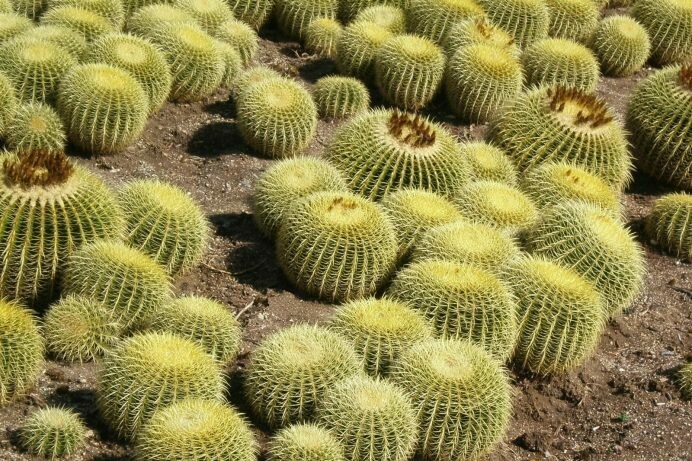
Golden Barrel Cactus displaying characteristic golden spines and ribbed structure in natural habitat
General Rule: Most succulents and cacti need bright light with several hours of direct sunlight daily.
Indoor Placement: South or west-facing windows are ideal. Place plants as close to windows as possible.
Outdoor Placement: Gradually acclimate indoor plants before moving outside. Start with morning sun only, then increase exposure over 1-2 weeks.
Signs of Insufficient Light: Etiolation (stretching), pale coloration, leaning toward light source, and loss of compact form.
Signs of Too Much Light: Sunburn appears as brown or white patches, usually on the side facing the sun. Some reddening is normal stress coloration.
Species Variations: Haworthia and Gasteria prefer bright indirect light. Most Echeveria, Sedum, and cacti need several hours of direct sun.
Watering Guide
The Golden Rule: "Soak and dry" method—water thoroughly until water drains from bottom, then let soil dry completely before watering again.
Frequency: Every 7-14 days during growing season (spring/summer), every 2-4 weeks in dormancy (fall/winter).
How to Water: Water the soil directly, not the leaves. Water until it flows from drainage holes, ensuring the entire root ball is saturated.
Signs of Underwatering: Wrinkled or shriveled leaves, dry and crispy lower leaves, very lightweight pot.
Signs of Overwatering: Yellowing, translucent, or mushy leaves, black spots, soft stems, or foul odor from soil.
Water Quality: Room temperature water is best. Allow tap water to sit overnight if heavily chlorinated.
Seasonal Adjustments: Many succulents are semi-dormant in winter; reduce watering significantly and only water when leaves show signs of thirst.
Soil & Potting
Drainage is Critical: Use well-draining soil specifically formulated for cacti and succulents, or create your own mix.
DIY Soil Mix: 50% potting soil + 50% drainage material (perlite, pumice, or coarse sand).
Container Requirements: Pots must have drainage holes. Terracotta is excellent as it's porous and allows excess moisture to evaporate.
Pot Size: Choose pots slightly larger than the root system. Succulents prefer snug pots; too much soil retains excess moisture.
Repotting: Repot every 2-3 years or when root-bound. Best done in spring at the start of growing season.
After Repotting: Wait 3-7 days before watering to allow any damaged roots to callous over.
Temperature & Environment
Temperature Range: Most succulents thrive in 60-80°F (15-27°C) during the day.
Cold Tolerance: Many succulents can tolerate brief periods down to 40°F (4°C), but most are damaged below freezing. Notable exceptions include some Sempervivum species.
Heat Tolerance: Most handle high temperatures well if properly acclimated, though some may go dormant above 90°F (32°C).
Humidity: Low to moderate humidity (20-40%) is ideal. High humidity can promote fungal issues and rot.
Air Circulation: Good airflow prevents fungal problems and helps soil dry properly.
Fertilizing
Frequency: Feed monthly during the growing season (spring and summer). Do not fertilize during dormancy.
Type: Use a balanced fertilizer diluted to half or quarter strength, or use a cactus/succulent-specific fertilizer.
Application: Apply to moist soil, never dry soil or when plant is stressed.
Benefits: Promotes healthy growth, vibrant colors, and better blooming, though succulents can survive without regular fertilization.
Caution: Over-fertilization causes leggy growth and can damage roots. Less is more with succulents.
Propagation
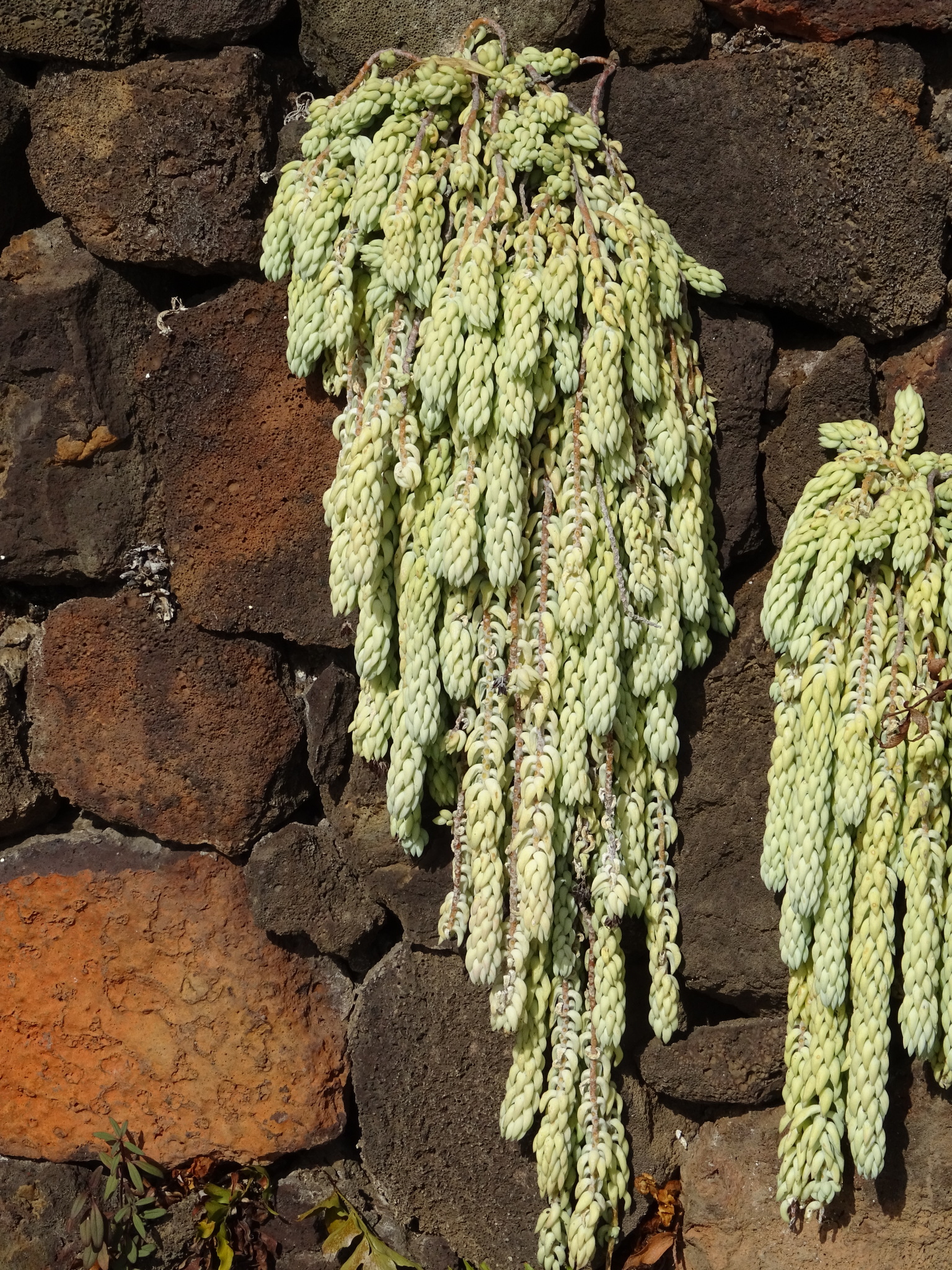
Sedum morganianum (Burro's Tail) displaying trailing succulent growth habit in natural setting
Leaf Propagation: Gently twist healthy leaves from stem. Let callous for 2-7 days, then place on soil. Mist when roots appear.
Stem Cuttings: Cut healthy stems, let callous for 3-7 days, then plant in dry soil. Water lightly after roots develop (1-2 weeks).
Offsets/Pups: Many succulents produce baby plants. Separate when they're a good size and have developed roots.
Seeds: Possible but slow; can take months to years for mature plants. Best for rare species or breeding projects.
Best Timing: Spring and early summer when plants are actively growing.
Success Tips: Patience is key. Avoid overwatering propagations; they need very little water until established.
Common Problems & Solutions
Etiolation (Stretching): Caused by insufficient light. Move to a brighter location; stretched growth won't revert but new growth will be compact.
Root Rot: Result of overwatering and poor drainage. Remove affected parts, let plant dry, repot in fresh dry soil, and adjust watering.
Mealybugs: White cottony pests in leaf axils. Treat with isopropyl alcohol on a cotton swab or insecticidal soap.
Scale: Brown bumps on stems and leaves. Scrape off manually and treat with horticultural oil.
Fungus Gnats: Indicate soil staying too moist. Let soil dry longer between waterings and use a layer of sand on top.
Sunburn: Move gradually to brighter light. Sunburned areas won't heal but new growth will be healthy.
Pro Tips for Success
- Most succulents are non-toxic, but some Euphorbia species produce toxic sap—handle with care
- Morning sunlight is gentler than afternoon sun; great for varieties prone to sunburn
- Leaf color often indicates stress level: reds, pinks, and purples usually appear with proper sun stress
- When in doubt, underwater rather than overwater—succulents are drought-tolerant but not flood-tolerant
- Remove dead leaves from the base to prevent pests and improve appearance
- Rotate pots regularly to ensure even growth and prevent leaning
- Many succulents bloom with proper care—some need a cool winter rest period to initiate flowering
- Group succulents with similar water and light needs for easier care
- Clean dust from leaves periodically with a soft brush to maximize photosynthesis